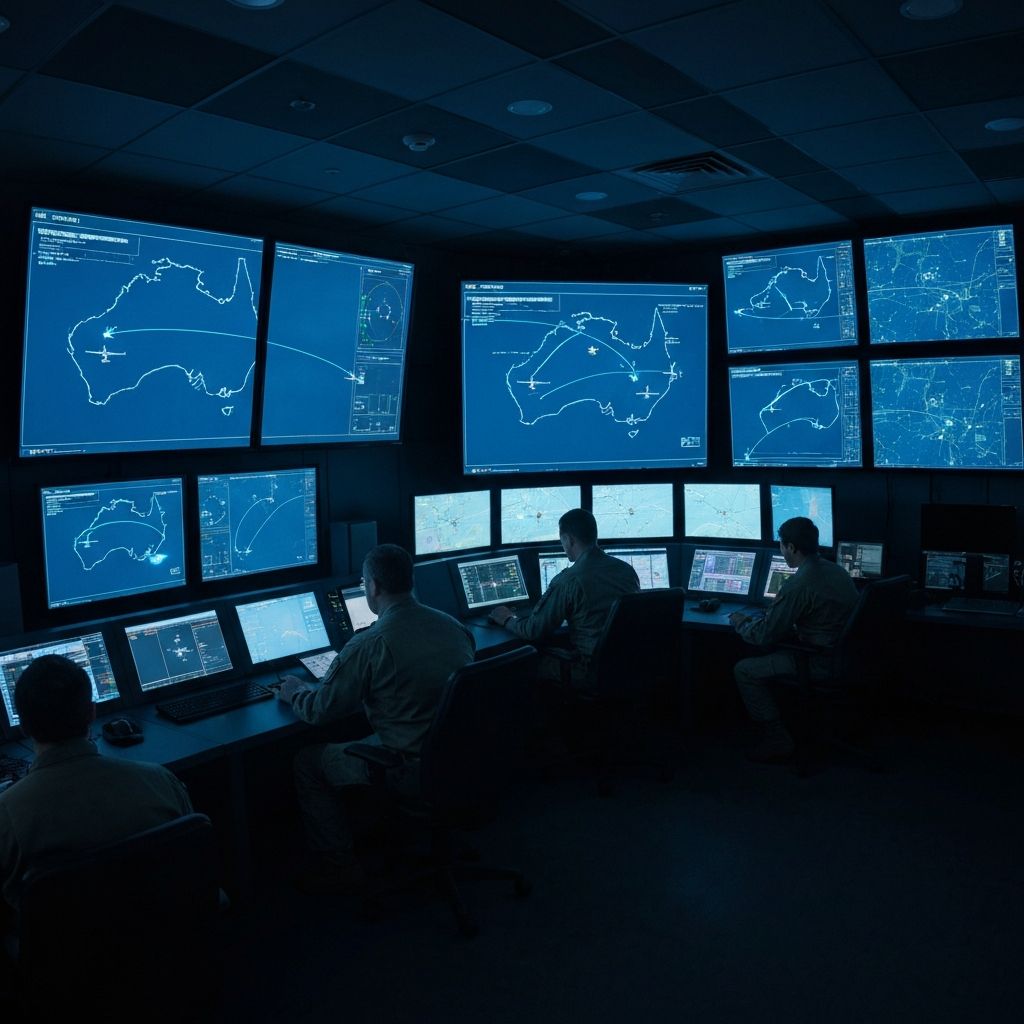
Beyond Visual Line of Sight (BVLOS) operations represent the regulatory frontier for commercial drone applications in Australia. Understanding the current framework and pathway to approval is essential for organisations planning to deploy autonomous surveillance systems.
The Regulatory Landscape
The Civil Aviation Safety Authority (CASA) regulates all drone operations in Australia through Part 101 of the Civil Aviation Safety Regulations. Standard drone operations require the pilot to maintain visual line of sight with the aircraft at all times—a requirement that fundamentally limits the utility of drones for large-scale surveillance applications.
BVLOS operations require specific approval from CASA, granted on a case-by-case basis following rigorous safety assessment.
Current Framework
Risk Assessment
CASA employs a Specific Operations Risk Assessment (SORA) methodology adapted from European frameworks. This systematic approach evaluates:
- Ground risk: The potential for harm to people and property on the ground
- Air risk: The potential for collision with manned aircraft
- Operational risk: Factors related to the specific operation and operating environment
Technical Requirements
Approved BVLOS operations typically require:
- Detect and Avoid (DAA) systems: Technology to identify and avoid other aircraft
- Redundant communications: Multiple independent command and control links
- Automated safety features: Geofencing, return-to-home, and emergency landing capabilities
- Real-time monitoring: Continuous operator awareness of aircraft status and position
Operational Controls
Beyond technical requirements, CASA considers operational controls including:
- Operating area segregation from manned aviation - Time-of-day restrictions - Weather limitations - Emergency procedures and coordination with emergency services
Pathway to Approval
Step 1: Preliminary Assessment
Operators should engage with CASA early in the planning process. Preliminary assessments help identify potential issues and establish dialogue with regulators.
Step 2: Safety Case Development
A comprehensive safety case must document:
- The proposed operation in detail - Risk assessment methodology and findings - Technical specifications of aircraft and systems - Operational procedures and training - Emergency response procedures
Step 3: Review and Approval
CASA reviews submitted safety cases, often requiring additional information or modifications. The review process can take several months for complex operations.
Step 4: Operational Approval
Approved operations receive specific conditions and limitations. Operators must demonstrate ongoing compliance and report any incidents or changes to approved procedures.
Industry Progress
Several Australian organisations have achieved BVLOS approvals for specific applications:
- Emergency services conducting search and rescue operations - Mining companies inspecting remote infrastructure - Agricultural operations monitoring large properties
Each approval builds precedent and understanding, gradually expanding the envelope of accepted operations.
Looking Ahead
CASA continues to develop its approach to BVLOS regulation, balancing safety requirements with industry needs. Anticipated developments include:
- Standardised approval pathways for common operation types - Technology certification standards for DAA systems - Expanded operating environments as safety records are established
The trajectory is clear: BVLOS operations will become increasingly routine as technology matures and regulatory frameworks evolve. Organisations preparing now will be positioned to capitalise on these capabilities as they become available.
PERCH Autonomous Systems
Research & Development Team