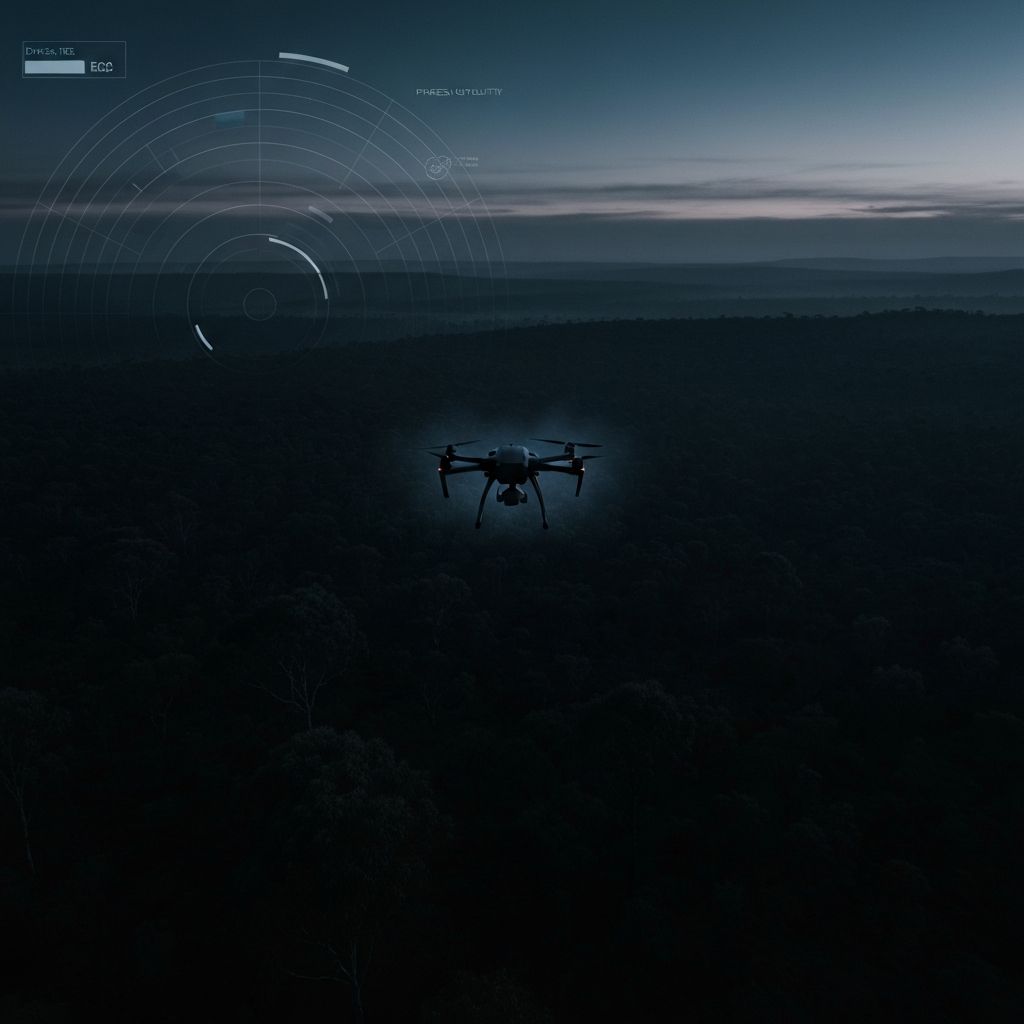
Australia's vast and challenging terrain has always presented unique obstacles for surveillance and monitoring operations. From the remote bushlands prone to devastating fires to thousands of kilometres of unmonitored coastline, traditional surveillance methods have proven insufficient for the scale of coverage required.
The Shift to Autonomous Systems
The emergence of dock-deployed autonomous drone systems represents a fundamental shift in how we approach persistent surveillance. Unlike traditional drone operations that require constant human oversight and frequent manual deployments, autonomous systems can operate continuously with minimal intervention.
These platforms combine several key technologies:
- Autonomous dock stations that handle charging, data transfer, and weather protection
- VTOL (Vertical Take-Off and Landing) aircraft that combine the hover capability of multicopters with the efficiency of fixed-wing platforms
- Edge computing systems that process sensor data in real-time for immediate threat detection
- Secure satellite and mesh network communications for reliable data transmission from remote locations
Applications Transforming Industries
Bushfire Detection
Early detection remains the most critical factor in bushfire response. Autonomous drone patrols equipped with thermal imaging can identify fire signatures hours before they become visible to satellites or ground observers. The ability to deploy within minutes of detection allows for immediate verification and precise location reporting.
Coastal Surveillance
Australia's maritime borders present enormous security challenges. Autonomous systems can maintain persistent patrol patterns, identifying vessels of interest and providing continuous monitoring of sensitive maritime zones without the cost of manned aircraft operations.
Critical Infrastructure
Remote infrastructure such as pipelines, power transmission networks, and mining operations require regular inspection. Autonomous drone systems can conduct routine patrols, identifying maintenance issues before they become critical failures.
The Path Forward
The regulatory framework for Beyond Visual Line of Sight (BVLOS) operations in Australia continues to evolve, with CASA working closely with industry to establish safe operational parameters. As these frameworks mature, we anticipate rapid expansion of autonomous surveillance capabilities across multiple sectors.
The future of surveillance in Australia is autonomous, persistent, and intelligent. Systems that can operate independently while maintaining human oversight for critical decisions represent the optimal balance of capability and safety.
PERCH Autonomous Systems
Research & Development Team